
Sex Offender Checks in Pulaski County
The Georgia Bureau of Investigation maintains the Georgia Sex Offender Registry, while county sheriffs register and verify people locally. For Pulaski County, the state portal is the public search layer. It can filter by name, Pulaski County, Hawkinsville, ZIP code, or a street address with a radius. The Pulaski County Sheriff's Office is the local confirmation point when a listing, verification date, or suspected violation needs follow-up.
Start with the question. A county filter provides the broad Pulaski County list. A street search helps with proximity to a particular address. A name search works best when aliases and spelling variants are considered. The national NSOPW service adds records from participating jurisdictions when a concern crosses state lines. Results can change, so verify them with the originating registry instead of saving an old copy as final. Live source dates matter whenever safety decisions depend on current facts.
Confirm Pulaski Registry Listings
The Pulaski County Sheriff's Office handles local registration and verification under Georgia law. Contact the Law Enforcement Center at 34 Badge Boulevard, Hawkinsville, through 478-783-1521 or the jail line at 478-783-4011 to identify the registration unit, appointment process, and current verification instructions. The official county page does not publish separate registry hours, a direct unit number, a fee, or an alert program, so call before visiting.
Pulaski County Sheriff's Office
34 Badge Boulevard
Hawkinsville, GA 31036
478-783-1521
Local listing confirmation and reports of suspected noncompliance.
How to Search the Georgia Registry
The Georgia Sex Offender Registry is free and maintained by GBI. Read its conditions before using a search. Begin with Pulaski County for a county-wide view, or enter Hawkinsville and an address when the location question is narrower. The result list is a path to source profiles, not a basis for confrontation.
- Open the GBI registry and read the public-use notice.
- Select Pulaski in the county field, or enter a name, Hawkinsville, ZIP code, or valid street address.
- Review possible matches by aliases, physical details, location, and registration status. Do not rely on the name alone.
- Open the source profile, note its update or verification details, and contact the Pulaski sheriff if a local fact needs confirmation.
| Field Label | Type | Required | Notes |
|---|---|---|---|
| First or Last Name | Text | No | Use name variants where the interface permits. |
| County | Dropdown | No | Select Pulaski for county-wide results. |
| City or ZIP | Text or dropdown | No | Use Hawkinsville or a five-digit ZIP. |
| Street Address | Text | For proximity | Enter a valid address for an area search. |
| Radius | Dropdown | With address | Available choices can change in the live portal. |
| Type or Status | Filter | No | Portal-defined categories may change. |
The manifest image captures a neutral search screen without identifying a registrant. The source registry interface should always be used for the live result:
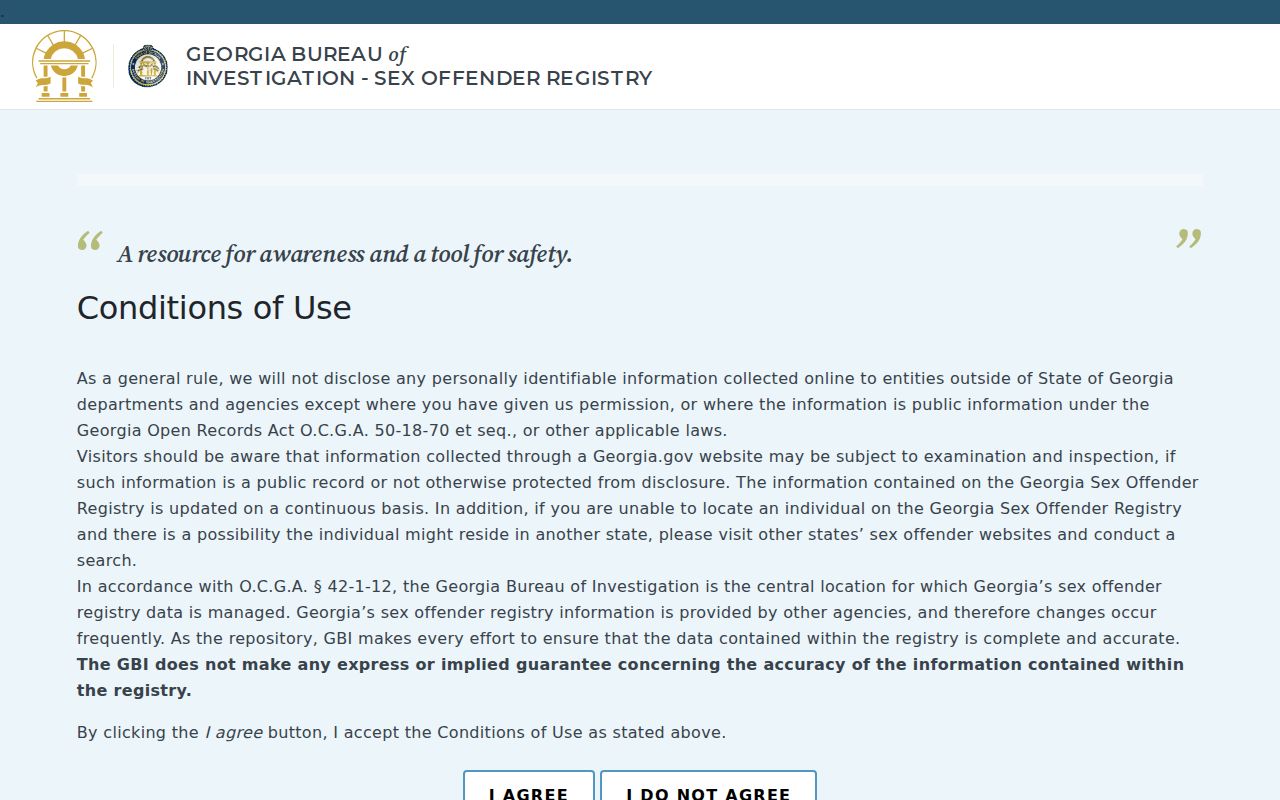
The screen shows why a place filter and a name search answer different questions. Use the live fields, since portal options can change.
Pulaski County or Address Search
A Pulaski County filter aims to return public listings tied to the whole county. A Hawkinsville or street-radius search focuses on a smaller place and may be more useful for neighborhood awareness. Neither proves where a person is at the moment. The address is a reported registry field, and a person can have primary and secondary addresses or a status that calls for closer reading.
Do not treat a blank radius result as a guarantee. Check the county view, try reasonable name variants, and consider NSOPW if nearby state lines or former addresses matter. When an address seems wrong, do not investigate at the location. Ask the Pulaski sheriff to confirm the proper reporting channel.
Inside a Pulaski Registry Profile
A public profile combines identity, address, offense, and registration fields. It may also show vehicle, school, volunteer, or work information when Georgia law makes those facts public. Read the conviction jurisdiction and statute rather than guessing from a label. No profile should be copied into editorial content, and protected information that is absent should remain private.
| Name & Aliases | Reported identity names used to distinguish possible matches. |
|---|---|
| Photo & Description | Photograph and traits such as height, weight, hair, eyes, and marks. |
| Registered Address | Primary or secondary location and county as reported. |
| Offense & Statute | Offense description, conviction date, law, and jurisdiction where shown. |
| Risk Classification | Georgia board classification, which is not a federal SORNA tier. |
| Registration Status | Status plus last verification or update details where public. |
Read Pulaski Profiles Carefully
A registry profile is not a full Pulaski County criminal history. It focuses on the facts Georgia law makes public for registration. It does not show every arrest, every court filing, or a person's live location. A custody roster answers whether someone is held; a registry address answers where a registrant has reported an address. Confusing those two sources can create a false conclusion.
The GBI registry overview explains the state's system and provides the source context shown here:
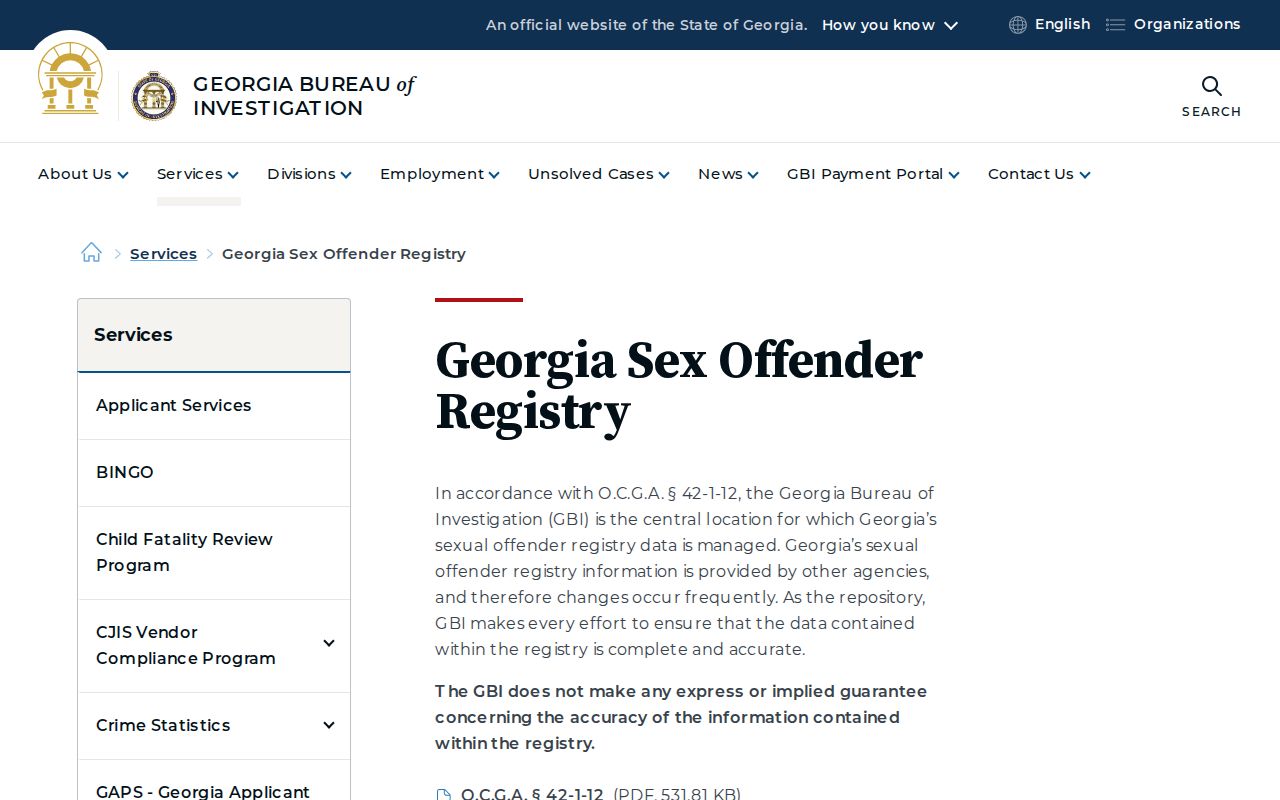
This overview is the better source for system rules, while the search portal supplies current public listings.
Georgia Registration Levels and Requirements
Georgia does not use a simple public Tier I, II, and III duration chart. Registration duties flow from the offense, date, and governing statute. Separately, the Sexual Offender Registration Review Board assigns risk classifications for risk and community-notification purposes. Many people face lifetime registration unless a statute or court order provides relief. The profile and current order control.
| Georgia Label | Practical Meaning | Duration and Visibility |
|---|---|---|
| Level I risk | Lower assessed risk classification | Does not itself end statutory registration. |
| Level II risk | Higher assessed risk classification | Community-notification consequences differ. |
| Sexually dangerous predator | Highest statutory classification | Usually lifetime duties and heightened monitoring; verify the order. |
| Unclassified | No completed board class shown | Registration and public listing can still apply. |
NSOPW Beyond Pulaski County
The U.S. Department of Justice's NSOPW search is useful when a safety question extends beyond Georgia. It returns source data from participating jurisdictions. That breadth does not make it more current than each state registry, so open the originating profile and confirm its details with the agency that maintains it.
The national public search interface provides the cross-state layer:
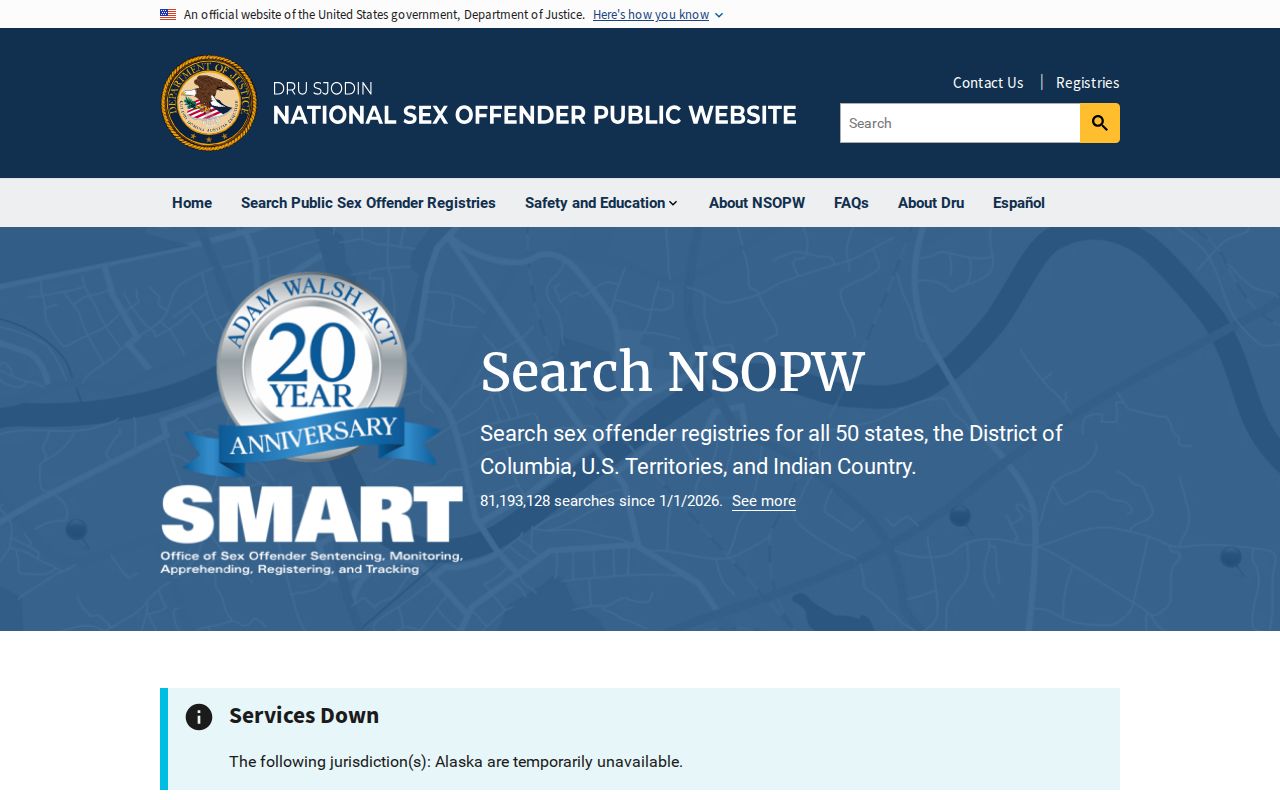
Use NSOPW to widen the geographic scope, then return to GBI and the Pulaski sheriff for a Georgia listing's local verification.
Georgia Registry Petition Route
O.C.G.A. §42-1-19 gives certain eligible people a petition route after sentence and supervision are complete and other statutory conditions are met. The law controls the filing location and service on the district attorney and sheriffs. It is not an automatic result, and a Level I label alone does not erase registration.
Residency, work, and school restrictions also depend on offense date and legal status under O.C.G.A. §§42-1-15 and 42-1-16. Avoid reducing them to one universal distance rule. Anyone reviewing their own duties should rely on the current statute, the sentencing or classification documents, and qualified legal advice.
Community Notification and Lawful Use
Registry information supports family and community safety planning. It should be checked against the live source and discussed with the Pulaski County Sheriff's Office when local verification is needed. No official Pulaski registry-alert app or email alert program was confirmed. Report suspected noncompliance to the sheriff, and use 911 for an immediate emergency.
Use registry data lawfully: O.C.G.A. §42-1-12 warns that using registry information to harass or commit a crime against a registrant is prohibited. Never threaten, confront, or target a person or household.