
Pulaski County Criminal Court Cases
Pulaski County criminal court cases do not all sit in one clerk's file. Pulaski Superior Court, part of the Oconee Judicial Circuit, has exclusive felony jurisdiction. Its clerk keeps accusations and indictments, motions, docket entries, pleas, judgments, sentences, and court orders. That file records what the prosecutor actually filed and how the court resolved each count. It is a different record from a jail booking sheet, which may list an initial charge that later changes.
Limited matters stay with other courts. Hawkinsville Municipal Court handles city ordinance, traffic, and limited misdemeanor matters within its authority. Probate Court keeps traffic and other matters assigned by statute. Magistrate Court handles warrant applications and may conduct early proceedings, but it does not try Pulaski County felony cases. Starting with the level of court saves time and reduces the risk of treating a missing search result as proof that no file exists.
Four Pulaski Criminal Court Counters
The local court pages show why one name search can miss part of a person's court history. Pulaski County maintains four distinct court channels, each tied to a defined subject and custodian. The courthouse at 141 Commerce Street houses Superior and Probate Court. Magistrate Court operates from Suite 105 at 45 South Lumpkin Street. Hawkinsville Municipal Court records are reached through City Hall at 56 Broad Street.
| Court | Criminal record role | Official contact |
|---|---|---|
| Superior Court | Felony charges, dockets, pleas, dispositions, and sentences | 141 Commerce St.; 478-783-1911 |
| Magistrate Court | Warrant applications and assigned first-appearance functions | Suite 105, 45 S. Lumpkin St.; 478-783-1357 |
| Probate Court | Traffic and other statutory matters | 141 Commerce St.; 478-783-2061 |
| Municipal Court | Hawkinsville ordinance, traffic, and limited misdemeanor cases | 56 Broad St.; 478-892-3240 |
The official Superior Court page provides a view of the local court contact route.
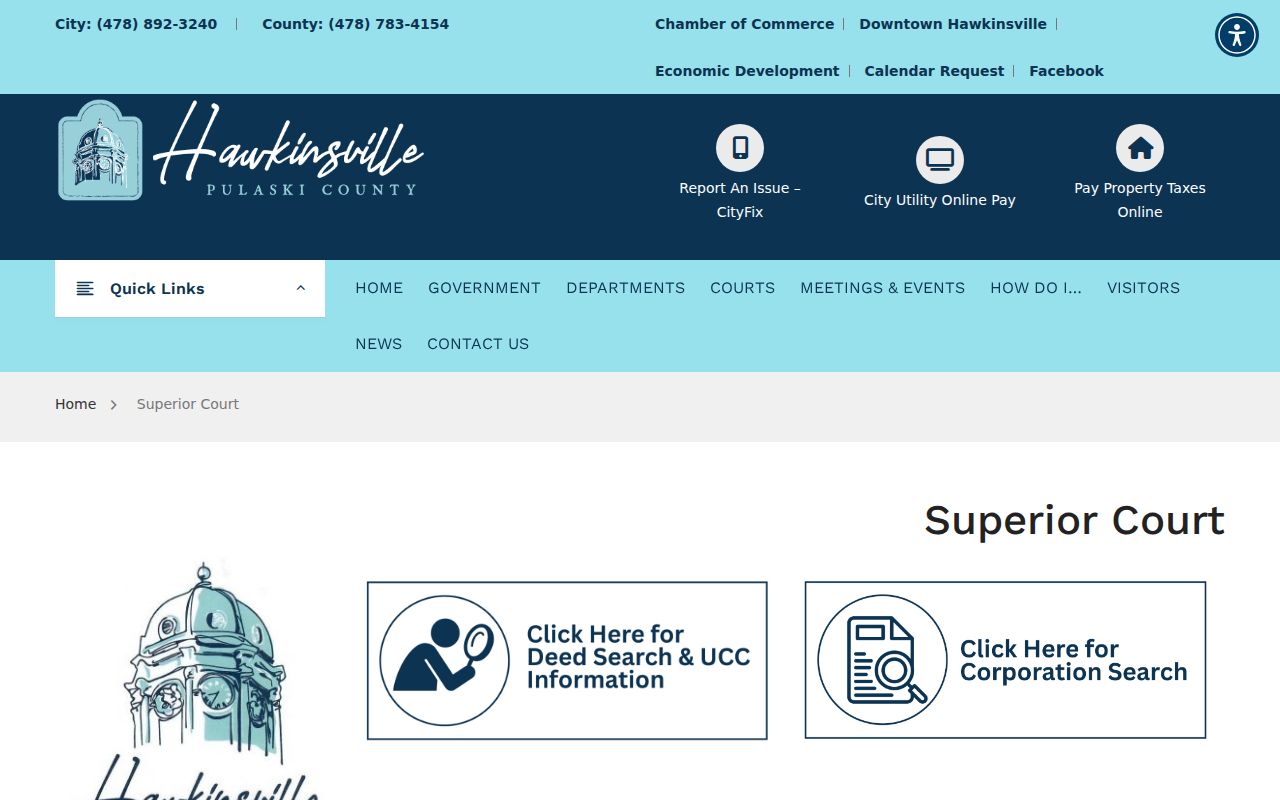
That local page is the practical fallback when an index entry lacks a scanned filing or a certified Pulaski County court record is needed.
Searching Pulaski County Case Records
Georgia Courts E-Access to Court Records is the official starting route for a remote Pulaski Superior search. It sends users to the listed provider, and an account is required. The provider may show an index, docket data, and available scanned documents, but Pulaski County historical coverage, document prices, export limits, and certification charges are not public before login. Use exact details, then confirm the result with the clerk.
- Open Georgia Courts E-Access and select Pulaski Superior Court.
- Create the provider account required for access.
- Search by exact party name or a clerk-issued case number.
- Review the court, status, filing date, charges, docket events, and disposition by count.
- Contact the Pulaski County clerk for missing filings, plain copies, or certified records.
The public landing route exposes only part of the provider controls, so fields beyond the basic options can vary after login.
| Field label | Type | Required | Notes |
|---|---|---|---|
| Party or name | Text | Unspecified | Common names may need added detail |
| Case number | Text | Optional route | Use the clerk-issued format exactly |
| Court | Selection | Yes | Select Pulaski Superior |
| Case type, date, status | Controls | Provider-dependent | Options are not exposed before login |
Pulaski Court Index Versus File
An online hit is a locator, not always the complete Pulaski County criminal court file. A provider index can identify a case number, party role, filing date, status, judge, hearing, or docket event. It may omit a paper exhibit, sealed filing, older scanned page, or certified judgment. The clerk remains the custodian of the official court record and can explain whether a missing item is held onsite, archived, or stored on microfilm.
This distinction matters when the outcome is the main question. A booking charge reflects the arrest stage. An accusation or indictment states the filed charge. A judgment states the court's result. Readers comparing an arrest with its later outcome can use the separate Pulaski County arrest lookup, then return to the clerk file for the authoritative disposition.
Note: Ask for a certified copy when the receiving office requires proof of the Pulaski County court's judgment rather than an online printout.
Inside a Pulaski County Case File
A Pulaski County criminal case file connects each filed count with the events that follow. It can name the court and judge, show whether the state used an accusation or indictment, list counsel, track hearings and motions, and record the plea and outcome for each count. Sentence details may include confinement, probation, fines, fees, and other terms. Public views should not expose Social Security numbers, protected victim details, juvenile material, or other confidential data.
| Case Number & Court | Identifies the Pulaski County file and the court with jurisdiction. |
|---|---|
| Charging Document | Shows the accusation or indictment, offense text, statute, and filed counts. |
| Docket Entries | Dates and descriptions for motions, orders, notices, and other filed events. |
| Hearing Dates | Calendar information for arraignment, motions, trial, or sentencing. |
| Disposition & Judgment | Records the result of each count, such as conviction, acquittal, dismissal, or nolle prosequi. |
| Sentence & Conditions | Lists confinement, probation, fines, fees, and court-ordered terms where public. |
These fields make the court file the best source for separating an allegation from the result reached in Pulaski County court.
Pulaski Limited Court Case Records
When a search concerns a warrant application, traffic matter, or city ordinance case, Superior Court may be the wrong counter. Pulaski Magistrate Court handles warrant applications and assigned early case functions. Its official page publishes a copy cost of 25 cents per page. It also lists a $20 pre-application-for-warrant fee, which applies to that court process rather than a general Superior Court case search.
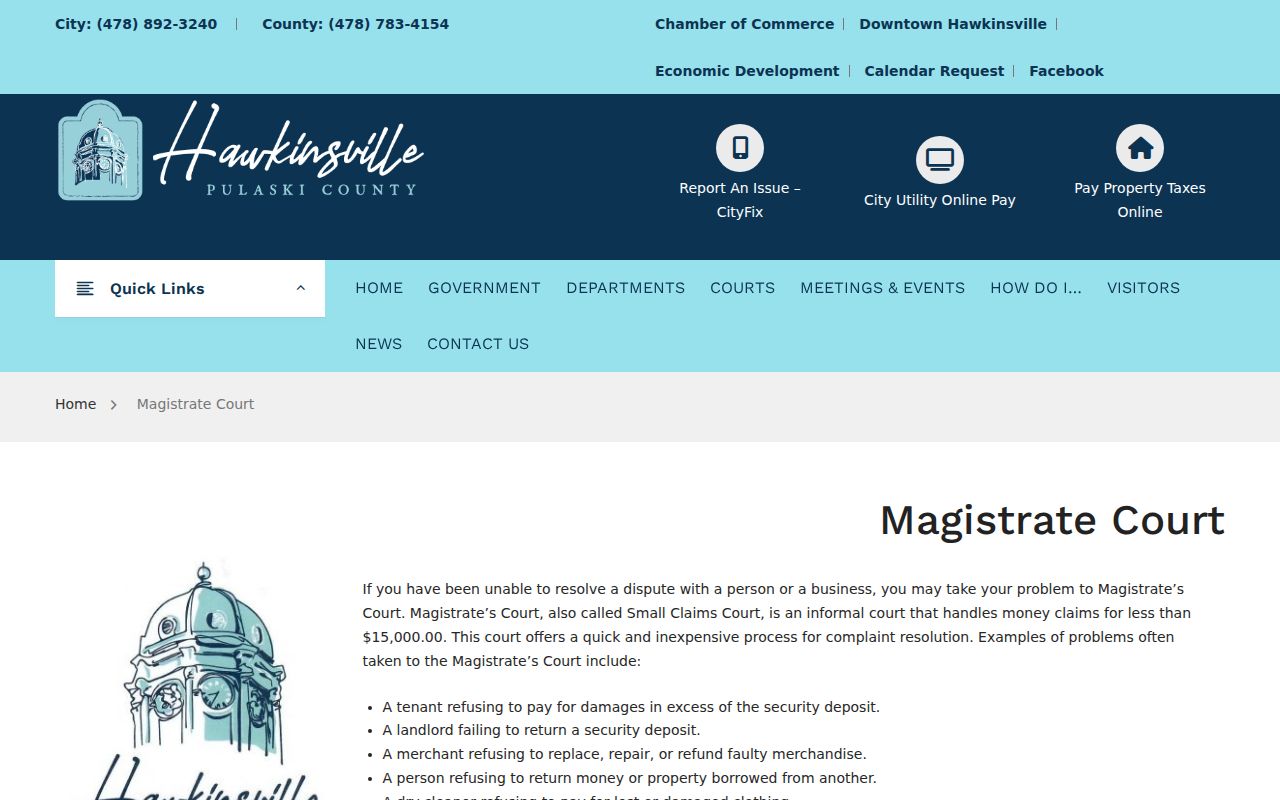
The image reinforces the need to match the request to the court. For a traffic or statutory Probate matter, the Pulaski Probate Court page supplies its own contact route.
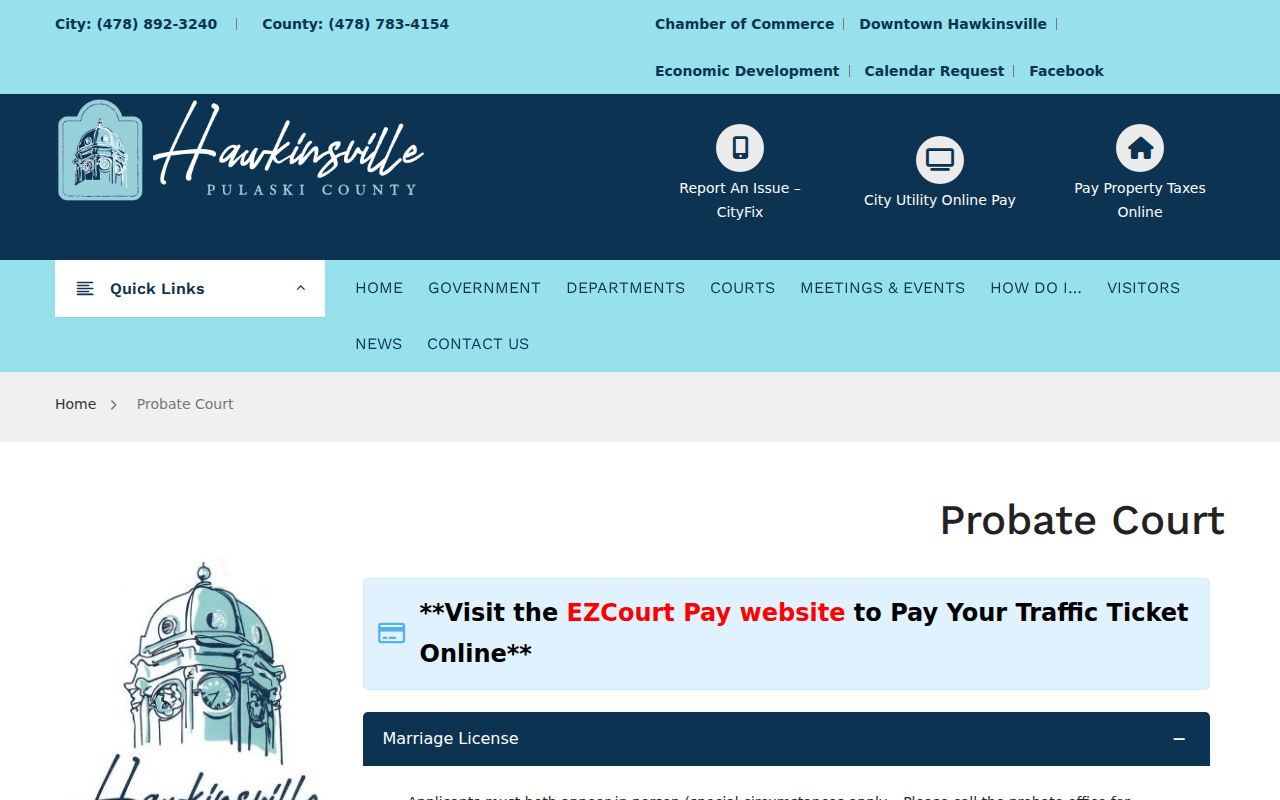
Probate and Magistrate records are separate from the Pulaski County felony docket, even when the same name or incident touches more than one proceeding.
How a Pulaski Criminal Case Moves
A Pulaski County felony file grows in stages. Law enforcement may begin with an arrest and first appearance, but the prosecutor decides which charge to pursue. The state may file an accusation where allowed or seek a grand-jury indictment. Arraignment records the plea. Discovery and motions follow, then the case reaches a negotiated plea or trial. Judgment and sentence create the final trial-court result, subject to any later appeal.
Case flow: Charges Filed › Arraignment › Pretrial › Plea or Trial › Disposition › Sentencing
Each step can create a docket entry, filed paper, order, or hearing date. Reading the flow in order helps explain why a current docket may show an open charge without a final result, or why an early booking label differs from the count in the judgment.
Pulaski Court Disposition Terms
Short status terms can change the meaning of a Pulaski County court record. They should not be treated as loose synonyms. Read the disposition for each count and compare it with the judgment, since a multi-count case may end in more than one result.
- Dismissed
- The charge ended without a conviction, though public traces may remain unless restriction or sealing applies.
- Nolle prosequi
- The prosecutor formally chose not to continue that charge.
- Dead docket
- The prosecution was removed from the active docket or paused, not necessarily erased.
- Acquitted
- A not-guilty verdict, which is distinct from a dismissal.
- Convicted
- A judgment of guilt following a plea or verdict.
Georgia record restriction may apply to some favorable outcomes under O.C.G.A. §35-3-37, but restriction of repository data and sealing of the Pulaski County court file are separate steps.
Older Pulaski County Criminal Cases
If a Pulaski County criminal case does not appear in the provider index, ask the clerk to search by defendant and approximate filing year. Supply a date of birth only through a secure channel approved by the office. Ask whether the file remains onsite, has moved to an archive, or exists on microfilm. Then identify the exact docket entry or final order needed and state whether a plain or certified copy will serve the purpose.
A narrow request is easier to price and locate. Ask for a written estimate because the clerk does not publish Pulaski Superior document or certification fees before provider login. Georgia Open Records Act requests do not replace the clerk's court-record process. The Act generally covers agency records, while the clerk manages filed court papers under court access rules and local procedure.
Pulaski Case Record Access Restrictions
Georgia law begins with public access but recognizes limits. O.C.G.A. §§50-18-70 and 50-18-71 govern open agency records and response duties. Georgia Uniform Superior Court Rule 21 addresses Superior Court access and electronic records practices. Neither rule makes sealed filings, juvenile files, protected victim details, medical information, or active investigative material open. A public index may redact fields or withhold a document even when other docket data remains visible.
When a Pulaski County case is absent, first verify the court and the spelling or case number. Then ask the clerk whether the file is old, restricted, sealed, or simply unavailable through the provider. A clerk may confirm the process without disclosing protected content. For an eligible record, O.C.G.A. §35-3-37 can restrict state repository dissemination and permits a separate request to seal related court records.
Federal prosecutions use another system. Pulaski County lies in the Middle District of Georgia, so those dockets do not appear in Superior Court. The official PACER federal case portal requires registration and provides federal case indexes and filed papers subject to sealing and redaction.
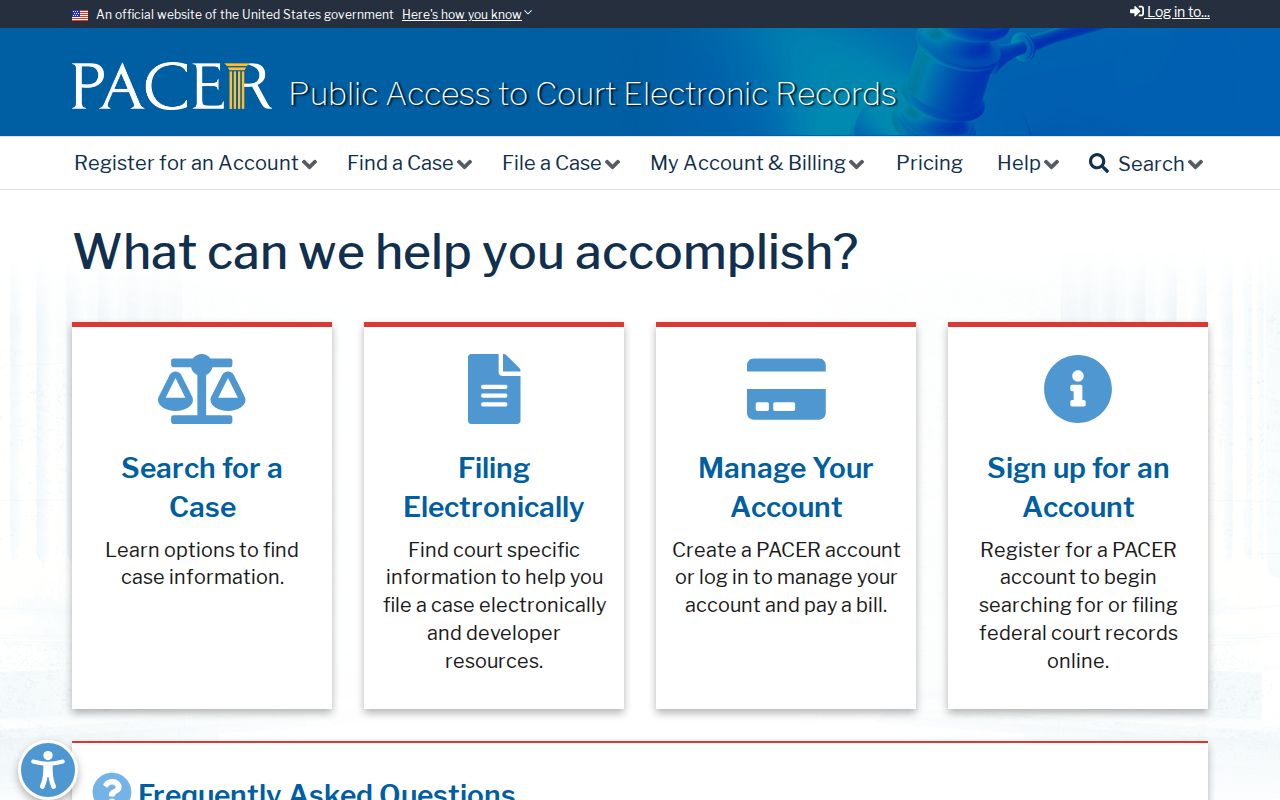
PACER is a separate federal layer, not a substitute for the Pulaski County clerk or Georgia Courts E-Access.