
Checking Pulaski County Criminal History
No single Pulaski County database combines incident reports, bookings, all court levels, Georgia repository entries, and state or federal custody. Start by deciding what fact must be proved. A current detention question belongs with the sheriff-linked inmate interface or jail line. A felony charge, disposition, or certified order belongs with the Pulaski Superior Court clerk. Georgia Felon Search answers a narrower question about in-state felony convictions, while a person reviewing their own broader state history should follow GCIC's inspection process.
Gather the full legal name, date of birth, spelling variants, and any case, booking, state identification, or offender tracking number already known. Those identifiers prevent a common name from being tied to the wrong Pulaski County file. Then follow the record back to its source:
- Use the Pulaski County sheriff page for recent-booking and current-custody links.
- Choose Pulaski Superior through Georgia Courts E-Access for a felony case, then create the provider account.
- Use Georgia Felon Search only when its felony-conviction scope fits the question.
- Compare the result with the source file and note whether it describes arrest, charge, disposition, or custody.
- Ask the custodian for a certified copy when an authoritative court document is needed.
Pulaski County's Shared Records Front Door
Hawkinsville and Pulaski County share an official government site. That setup is useful, but it can make city and county duties look like one office. The site's city-county directory is the practical first stop for locating the sheriff, Superior Court clerk, Magistrate Court, Probate Court, Municipal Court, and county administration. The clerk and Probate Court are tied to the historic courthouse at 141 Commerce Street. Magistrate Court is in Suite 105 at 45 South Lumpkin Street.
The official directory screen below shows why Pulaski County record access begins with the shared site. It routes a reader to the office that owns the requested file.
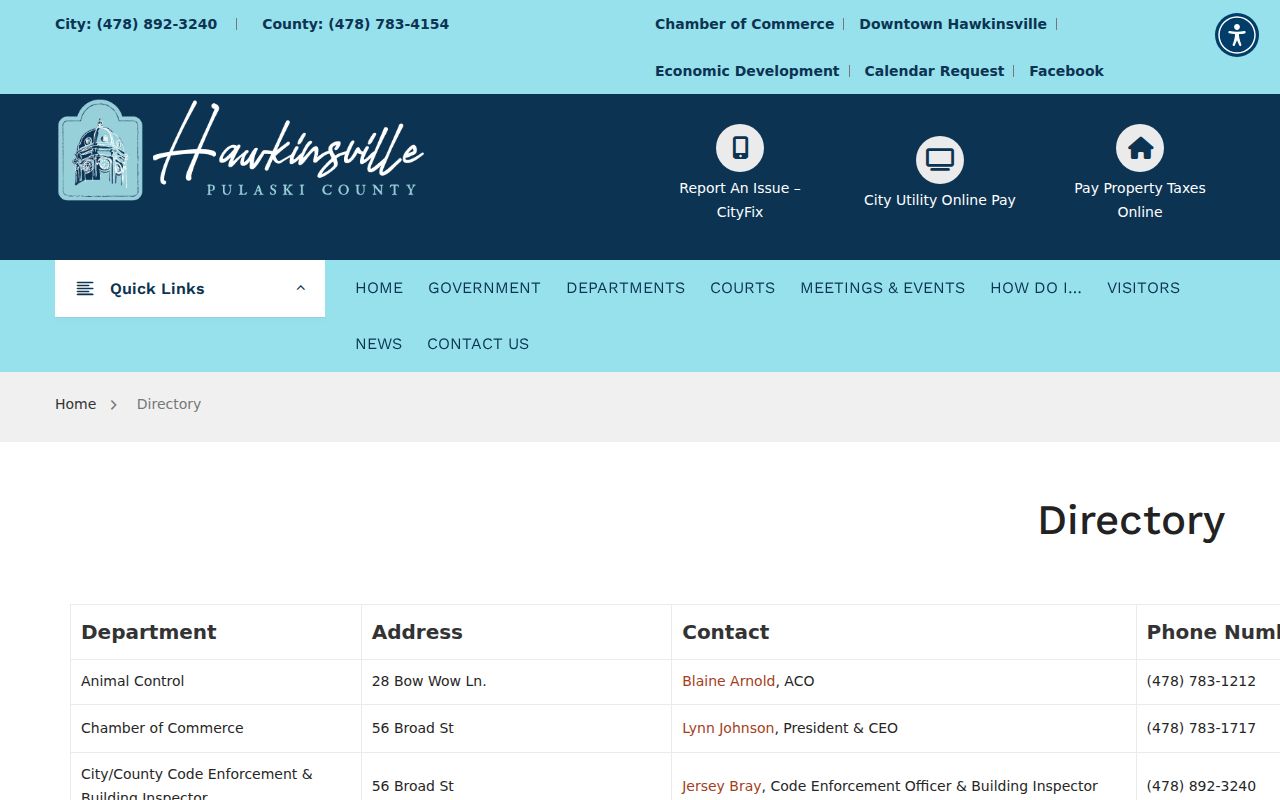
A directory entry is not a record search. Call the listed office before travel because the research sources do not publish clerk-counter hours, security rules, or parking details.
Pulaski Superior Court Clerk
141 Commerce Street
Hawkinsville, GA 31036
478-783-1911
Magistrate Court
45 South Lumpkin Street, Suite 105
Hawkinsville, GA 31036
478-783-1357
County Jail
34 Badge Boulevard
Hawkinsville, GA 31036
478-783-4011
Georgia Official Background Checks
The Georgia Bureau of Investigation's Georgia Crime Information Center maintains the state criminal-history repository. For self-review, GBI says most Georgia sheriffs or police departments can provide a copy under their own local procedure. GCIC also offers appointment-only record inspection and fingerprint services at its Decatur lobby. A broader record about another person normally requires the signed consent described by O.C.G.A. §35-3-34.
Georgia Felon Search is public and does not require consent, but it is limited to Georgia felony convictions. It asks for a full name, date of birth, sex, and race and uses a credit-card transaction. A no-match result does not rule out an arrest, misdemeanor, out-of-state matter, federal case, restricted event, or an entry filed under different identifying data. The official GBI criminal-history explanation identifies the fields found in a state history.
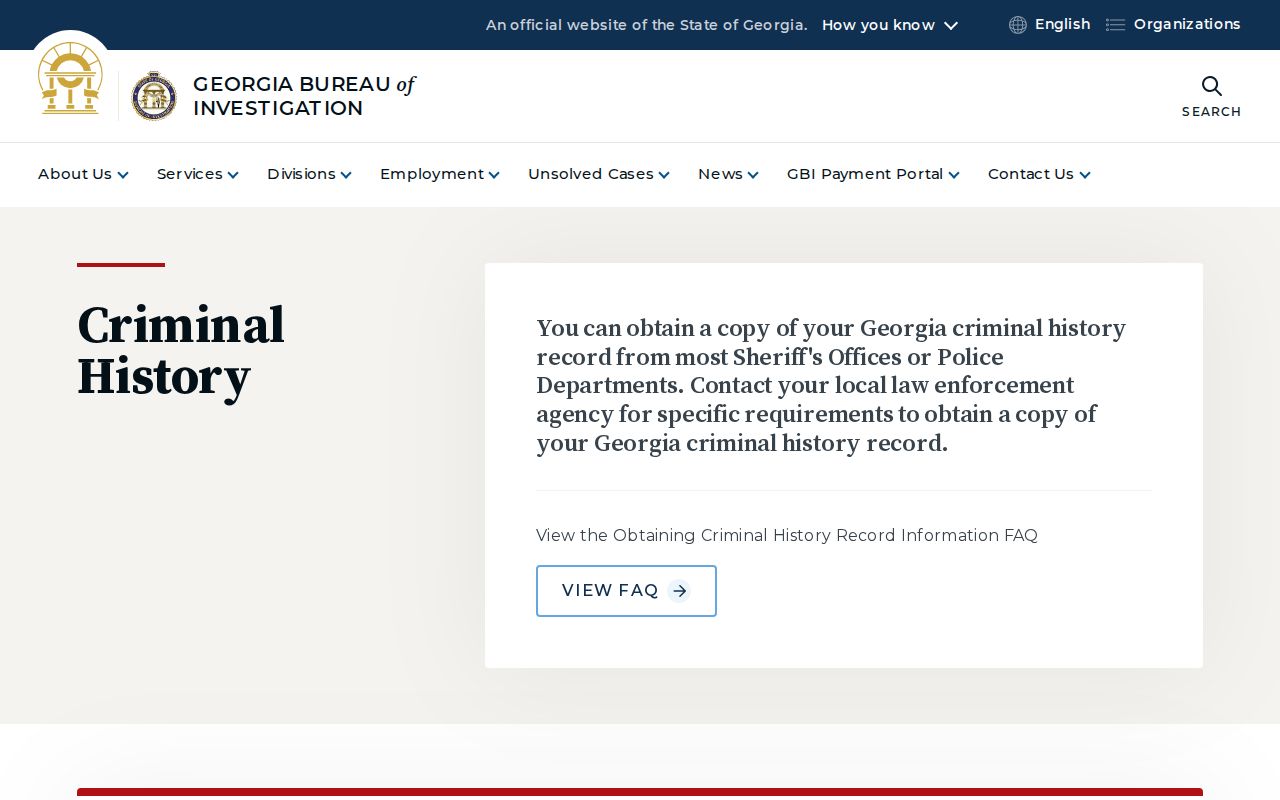
The state history organizes arrest cycles and reported outcomes. It does not replace a certified Pulaski County court order.
| Channel | Scope | Access point |
|---|---|---|
| Sheriff or police self-review | Georgia history under local procedure | Confirm identity and local fee first |
| Georgia Felon Search | In-state felony convictions | Name, birth date, sex, race, and payment |
| GCIC inspection | Personal Georgia record review | Appointment through GCIC |
| FBI Identity History Summary | Subject's own national fingerprint history | Electronic or mailed fingerprint route |
Pulaski County Fingerprint Record Routes
Georgia Applicant Processing Service, or GAPS, is the official fingerprint channel for checks authorized by an agency. The applicant begins with an agency-issued service code, enrolls through IdentoGO, books a fixed-site appointment, and brings valid photo identification. The code controls which sites and price appear. No fixed GAPS site in Pulaski County was confirmed, so residents should enter the real service code before assuming where they must travel.
The GAPS enrollment portal shown here is a service-code workflow, not a public name-search tool.
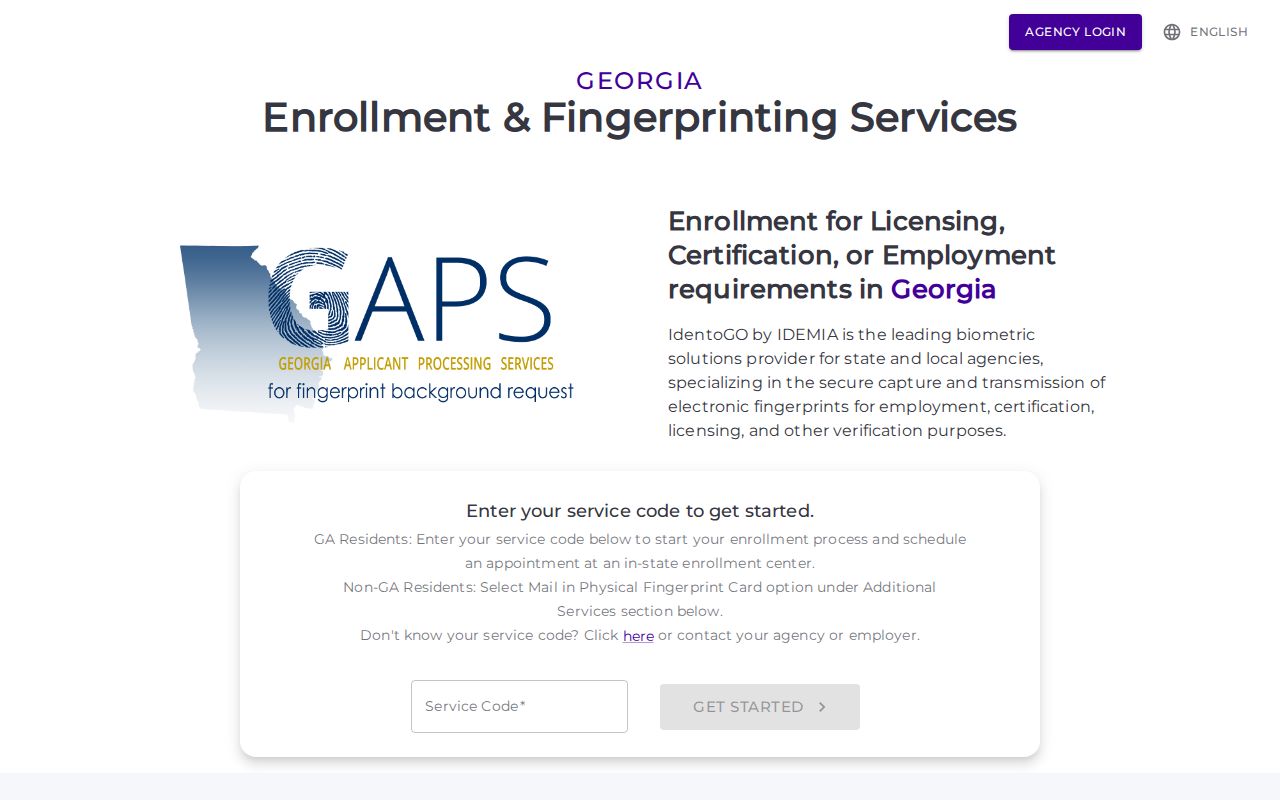
The authorized agency generally retrieves GAPS results within 24 to 48 hours. For personal federal review, the FBI uses a different process. Create an Electronic Departmental Order request, pay the FBI's $18 fee, and send fingerprints electronically at a participating Post Office or by the approved mail route.
The FBI EDO interface begins that subject-only national history request.
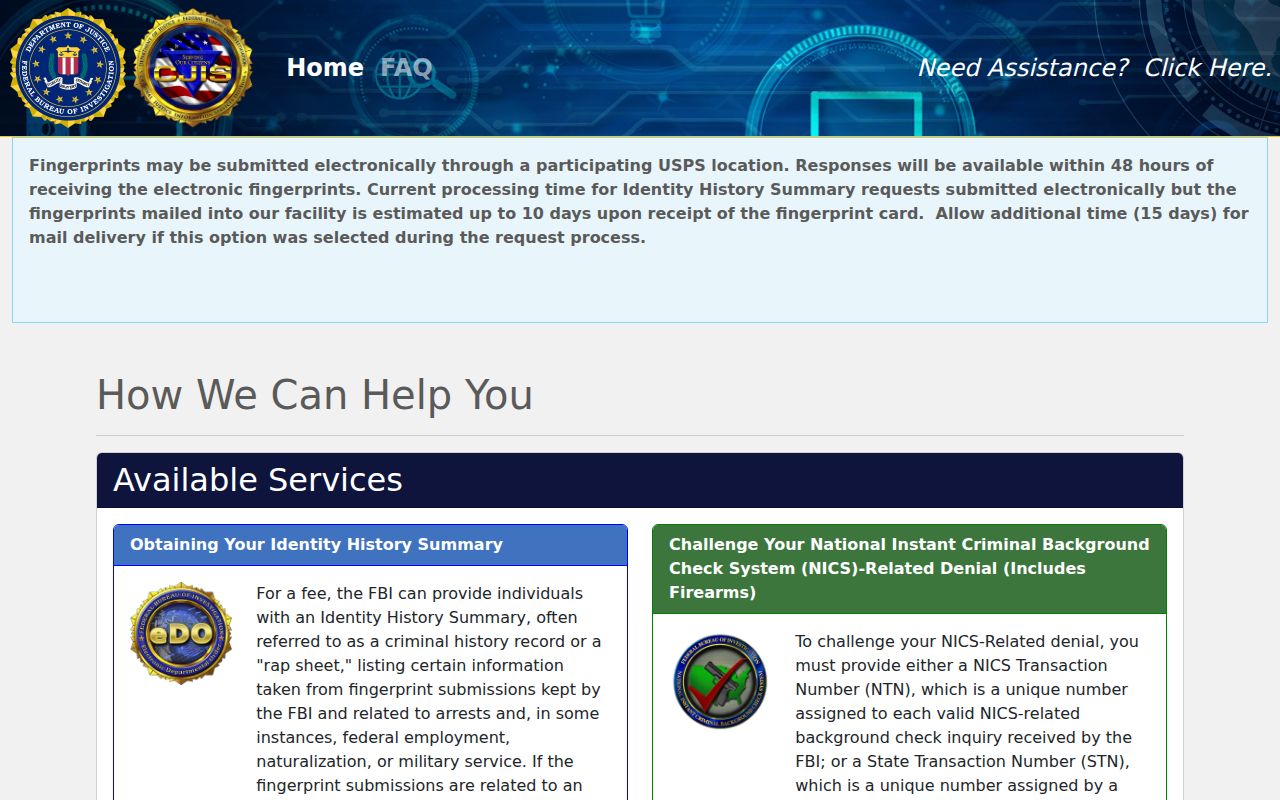
Neither fingerprint channel supplies a certified Pulaski County docket. Use the clerk for the filed case and final order.
Criminal Record Types
Pulaski County records differ by the act that created them. A deputy or state agent writes an incident or arrest report. Jail staff make the booking entry. The prosecutor files an accusation or seeks an indictment, and the court clerk maintains the case docket. GCIC then assembles reportable Georgia arrest and disposition data. Each source answers a different question.
- Incident and arrest reports describe the reported event and the officer's initial basis for action.
- Bookings show intake, initial charges, bond, release, and current or recent custody facts.
- Court files show filed charges, hearings, pleas, motions, disposition, sentence, and orders.
- Warrants originate with a judge and may be held by the issuing court and law enforcement.
- Supervision and registry records answer narrower probation, parole, custody, or registration questions.
A Pulaski County booking can exist even when no accusation or indictment follows. Likewise, an initial arrest charge can change after the prosecutor reviews the evidence.
Two Pulaski County Custody Systems
Two Hawkinsville addresses lead to very different custody records. The Pulaski County Jail and Law Enforcement Center at 34 Badge Boulevard holds local detainees and creates county booking records. The sheriff page separates its public tools into a Jail Report for recent bookings and Inmate Information for current custody. Call the jail at 478-783-4011 when processing is too recent to appear or an interface is unavailable.
Pulaski State Prison at 373 Upper River Road is a Georgia Department of Corrections medium-security institution. Its sentenced-offender information belongs in GDC Find an Offender, not the county jail roster. Federal custody is separate again and belongs in the Bureau of Prisons locator. Mixing these systems is a common reason a correct search seems to return no result.
- Booking record
- The county jail's intake account of an arrest and custody status.
- Court disposition
- The filed outcome of a charge, such as conviction, dismissal, or another final action.
- GCIC cycle
- A state repository grouping that connects a reported arrest with later disposition data.
- State custody
- Confinement or status maintained by GDC rather than the Pulaski County sheriff.
Inside a Pulaski County Criminal Record
The fields depend on the custodian. A Pulaski County court file may show the case number, court, filing date, judge, parties, charge text, docket events, disposition, sentence, orders, and document links. A GCIC history adds identity and arrest-cycle data, including the state identification number and offender tracking number when reported. The jail record focuses on booking and custody.
| Name and identifiers | Legal name, aliases, birth data, physical descriptors, SID, OTN, case number, or booking number as applicable. |
|---|---|
| Arrest and booking | Agency, arrest date, booking date, initial charge, bond, release, and custody facts. |
| Charges and statutes | Alleged offense text and the code section used at that stage. |
| Disposition | The court's result for each filed charge, not the officer's first allegation. |
| Sentence | Confinement, probation, fines, conditions, credit, and related orders when public. |
| Custody or supervision | County detention, GDC status, probation, or parole information within the source's scope. |
Protected victim data, juvenile material, medical facts, and personal identifiers may be removed from public copies. A source can also lag while a final Pulaski County disposition moves from the clerk to GCIC.
Pulaski County Warrant Fallback Chain
Pulaski County has no confirmed public countywide warrant portal. Do not treat a jail roster or Felon Search as a warrant check. For a warrant tied to the sheriff, call the sheriff number at 478-783-1521 or dispatch at 478-783-1212 and ask how identity and status can be confirmed. Active or sensitive warrants may not be disclosed by phone.
A bench warrant may sit with the court that issued it. Contact the clerk and use a case number when possible. Magistrate Court publishes a $20 pre-application-for-warrant fee, but that fee concerns starting a private warrant application, not buying a warrant search. If the matter is not resolved by phone, make a focused written request under the Georgia Open Records Act and ask the agency to cite any lawful withholding.
Note: A person who may have an active warrant should seek legal advice before appearing at a law-enforcement counter.
Public Access Laws in Georgia
The Georgia Open Records Act governs many agency records, while separate statutes control criminal-history dissemination, restriction, court sealing, and registry publication. A written request to the designated open-records officer creates a clear record of what was sought. The agency must respond within three business days by producing the record or stating when it will be available and giving the legal basis for any withholding.
Key Georgia laws:
O.C.G.A. §§50-18-70 through 50-18-77 set the public-record request and response rules.
O.C.G.A. §35-3-34 controls access to Georgia criminal-history information and consent.
O.C.G.A. §35-3-37 governs eligible record restriction and related sealing.
O.C.G.A. §42-1-12 governs Georgia registry duties and public information.
Search, retrieval, redaction, and copying charges may apply. The first quarter-hour of administrative time is not charged. Pulaski County agencies may require prepayment when estimated cost exceeds $25 and may wait for agreement when it exceeds $500. Active investigations and protected personal facts may be withheld or redacted.
Pulaski County Supervision Records
Adult felony probation in Georgia is run through the Department of Community Supervision, while a court-approved provider may handle local misdemeanor probation. The court file remains the best source for the imposed sentence and its terms. Detailed officer notes and supervision files are not necessarily public. Parole decisions belong to the Georgia State Board of Pardons and Paroles, with field supervision coordinated through DCS.
The DCS office locator helps Pulaski County readers find the regional supervision office.
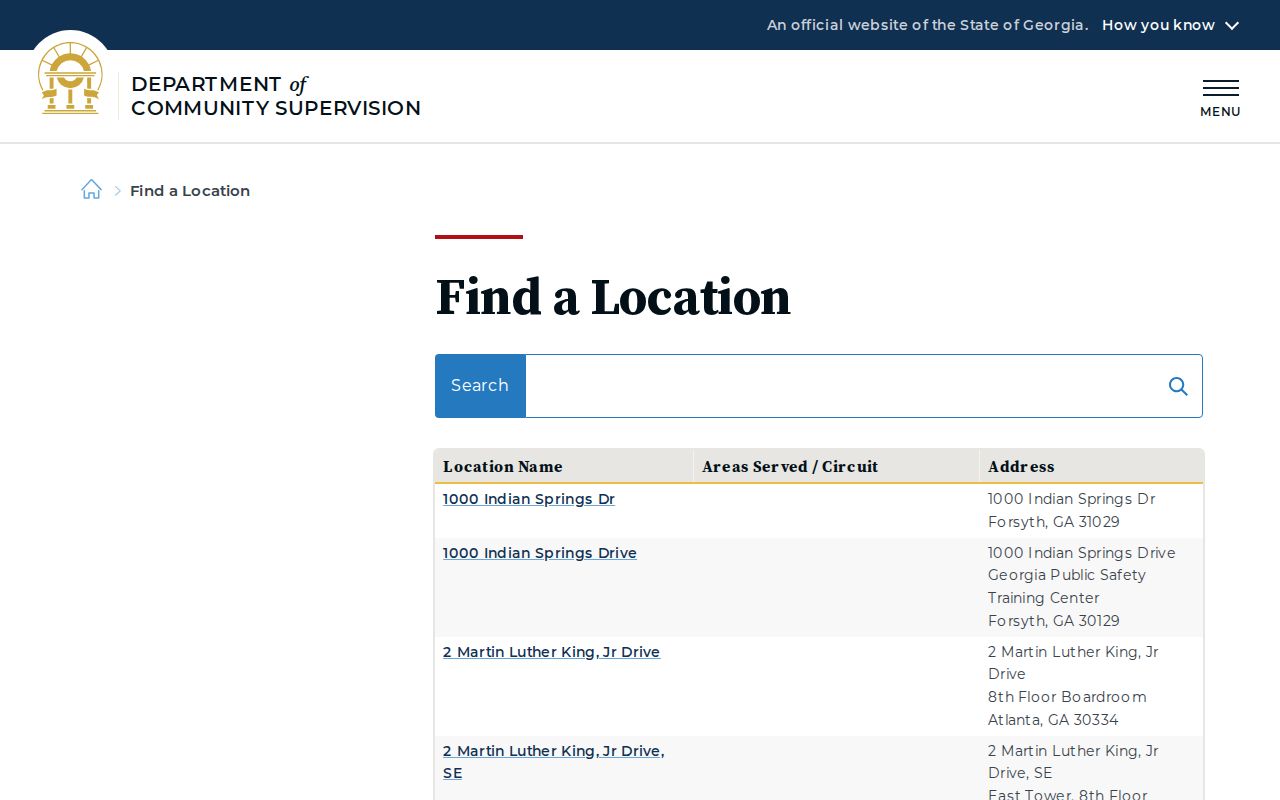
The locator identifies service offices, not a public file of an officer's case notes. The Dublin Day Reporting Center and circuit offices serve the region.
The Georgia parole consideration page explains how the board reviews eligible state cases.
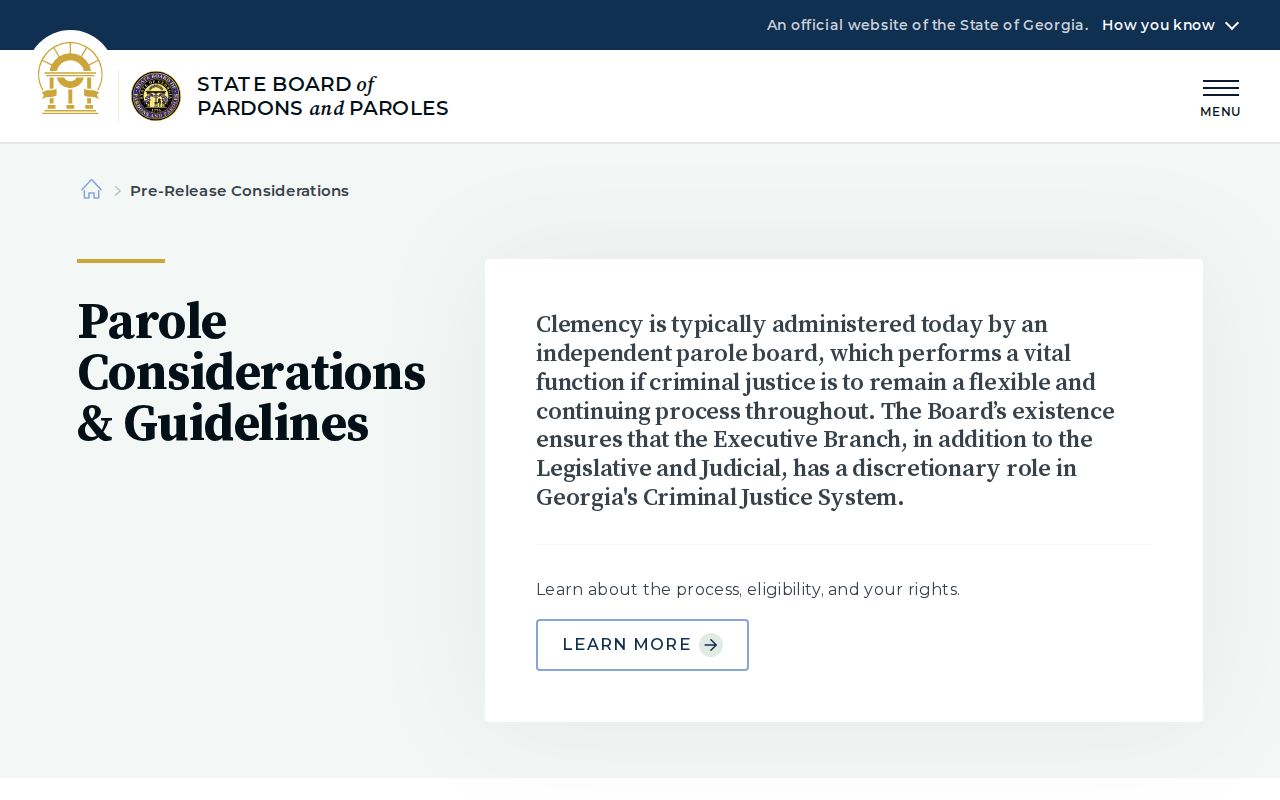
A parole decision is not the same as the Pulaski County conviction order that produced the sentence. Check both sources when the distinction matters.
Sealed, Restricted, and Expunged Records
Georgia calls its main remedy record restriction. It limits eligible GCIC information from ordinary noncriminal-justice release. Court sealing is a separate step that may accompany restriction under O.C.G.A. §35-3-37(m). First Offender Act discharge and sealing, pardons, and restriction have different rules and effects, so the correct route depends on the case outcome and date.
For arrests before July 1, 2013, the applicant generally begins with the arresting agency, then the prosecutor, and may owe a $25 GCIC processing fee by certified check or money order. For later arrests, the prosecutor enters the decision through the disposition process. A person whose Pulaski County case was dismissed should obtain the court result, identify the arrest cycle, and ask whether both GCIC restriction and court sealing are needed.
The GBI restriction instructions provide the official forms and process.
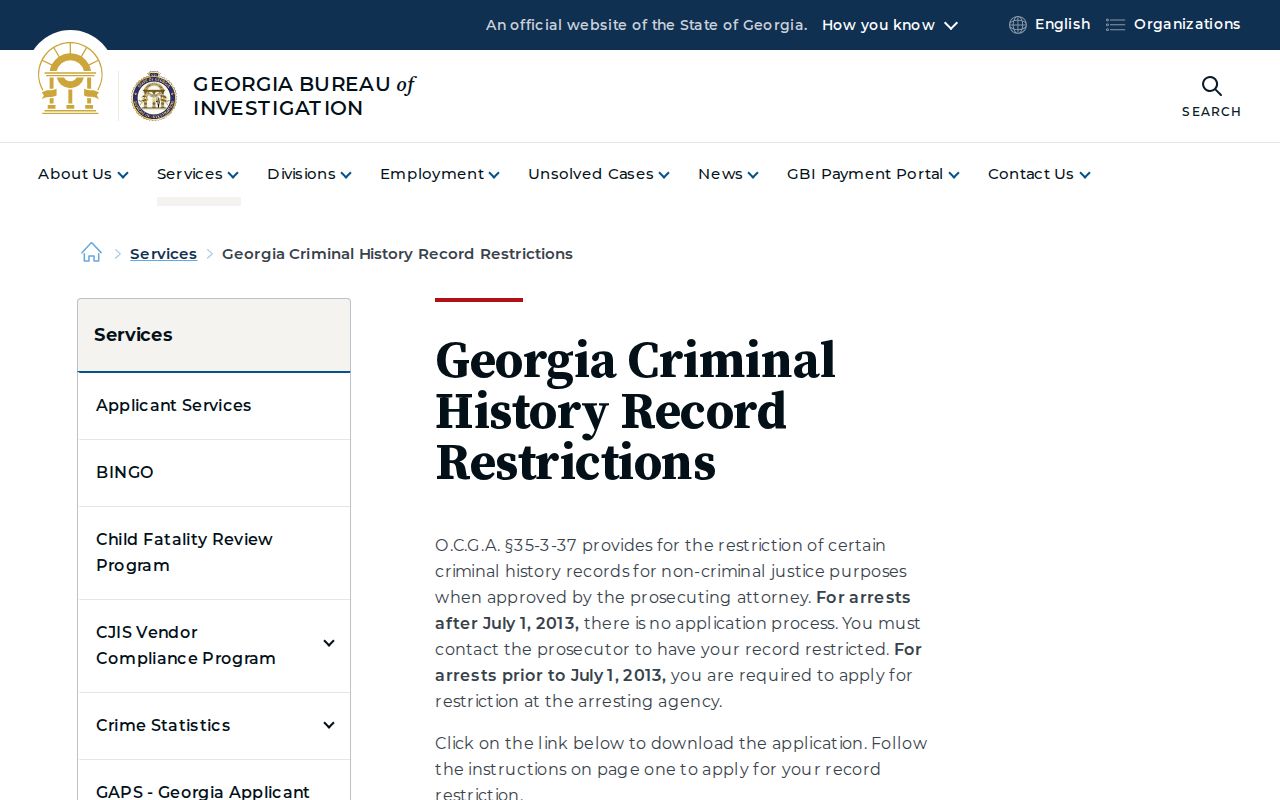
A restricted result may still be available for criminal-justice purposes or where Georgia law creates an exception. It does not erase every source copy by itself.
Fixing Pulaski County Record Gaps
A GCIC entry can lack a final Pulaski County disposition even when the clerk has closed the case. Start with a copy of the state history and mark the exact arrest cycle. Use the SID, OTN, arrest date, and agency data to distinguish it from other events. Then obtain the filed disposition from the court that decided the charge and ask the source agency to send the correction to GCIC.
Identity misuse requires a different proof path. GBI's mail instructions call for two fingerprint cards, identification, a written account, return address, and the prescribed fee. The fingerprints let GCIC compare the person with the record instead of relying on a shared name. Keep copies of each request and agency response.
| Local item | Published amount or rule |
|---|---|
| Magistrate Court copy | $0.25 per page |
| Magistrate pre-warrant application | $20 |
| Eligible pre-2013 GCIC restriction cycle | $25 by certified check or money order |
| FBI Identity History Summary | $18 FBI fee; fingerprint costs may add |
| Sheriff report or local history | No Pulaski County fee located; request an estimate |
Pulaski County Record Counts in Context
GBI's official 2024 crime summary gives Pulaski County a population of 10,219 and reports 95 index crimes from participating agencies. The total included 17 aggravated assaults, 16 burglaries, 57 larceny-thefts, four motor-vehicle thefts, and one robbery, with no reported murder, rape, or arson in that table. The stated rate was 9.30 per 1,000 residents. The 2023 summary reported 221 index crimes and a rate of 21.96, so a single year should not be treated as a fixed portrait of Pulaski County.
Those counts describe reported index offenses, not the number of people with criminal records. One event can produce several charges, no arrest, or more than one arrest. A booking is not a prosecution, and a filed case is not a conviction. Reporting gaps and agency participation also affect totals. Use the FBI Crime Data Explorer or Georgia's official summaries for trend context, then use the sheriff, clerk, or GCIC source for a specific Pulaski County record.
Pulaski County Criminal Records by City
Hawkinsville is Pulaski County's only incorporated city and its county seat. City-generated incident reports and Municipal Court files begin through city channels, while felony cases move to Superior Court and people arrested locally are booked through the county jail. The city guide separates those offices without inventing a second municipal records system.
Hawkinsville Criminal Records
4,854 residents in the official 2024 estimate. City Hall identifies the city custodian, and Municipal Court uses phone and counter access.